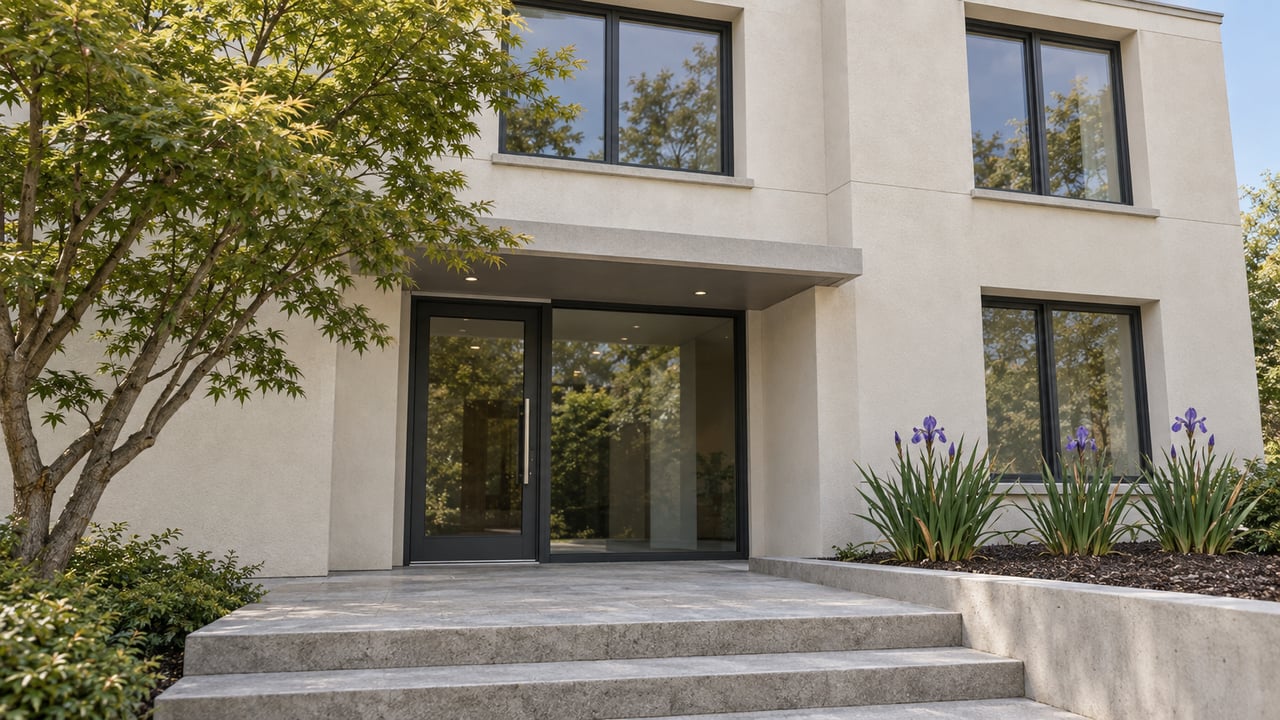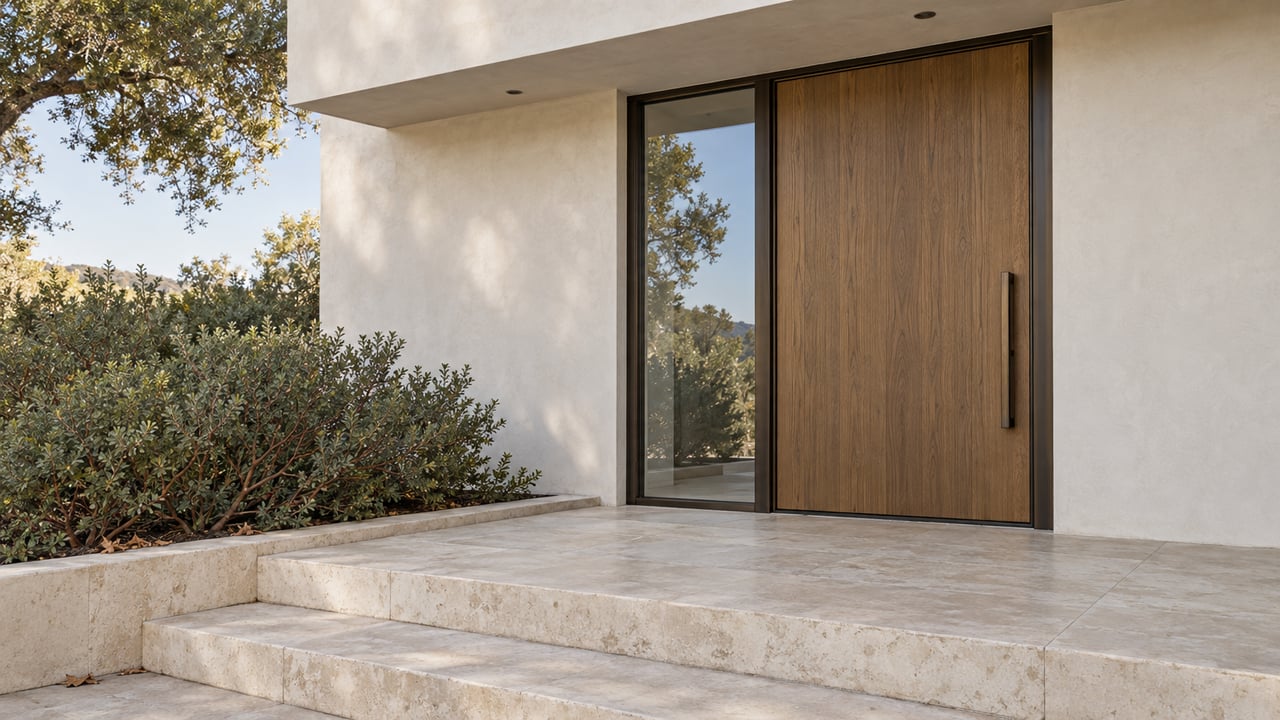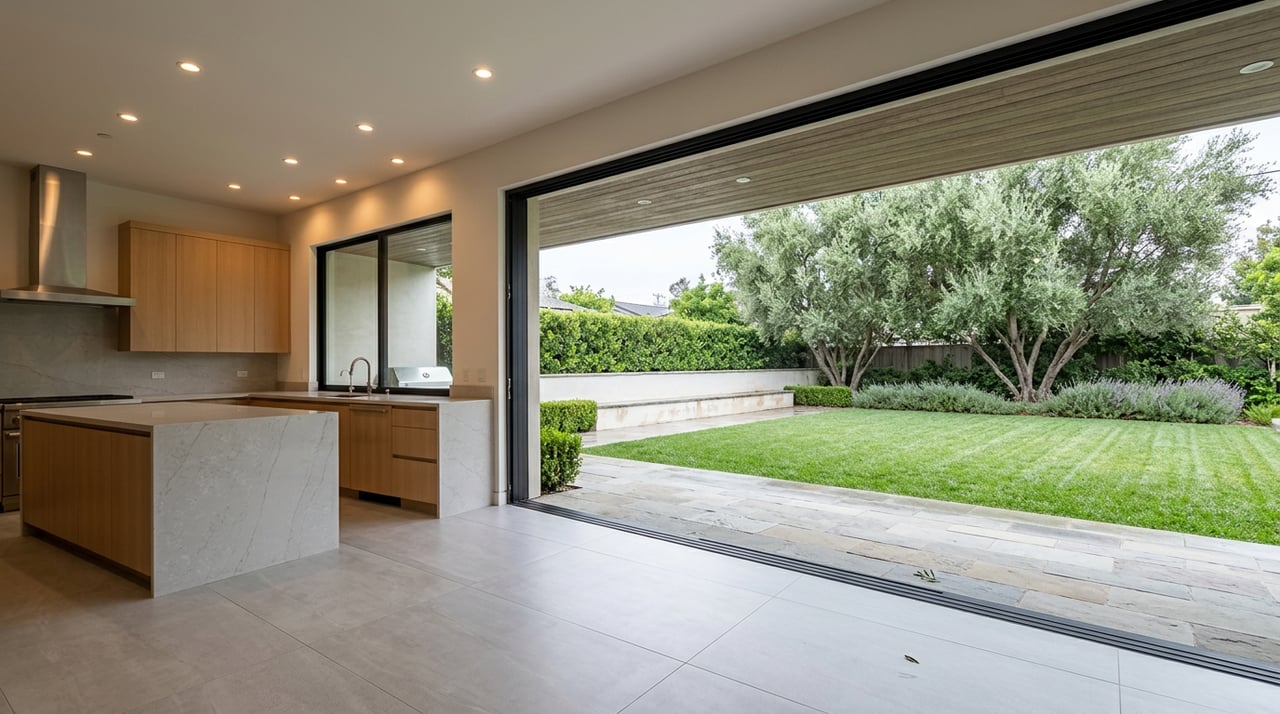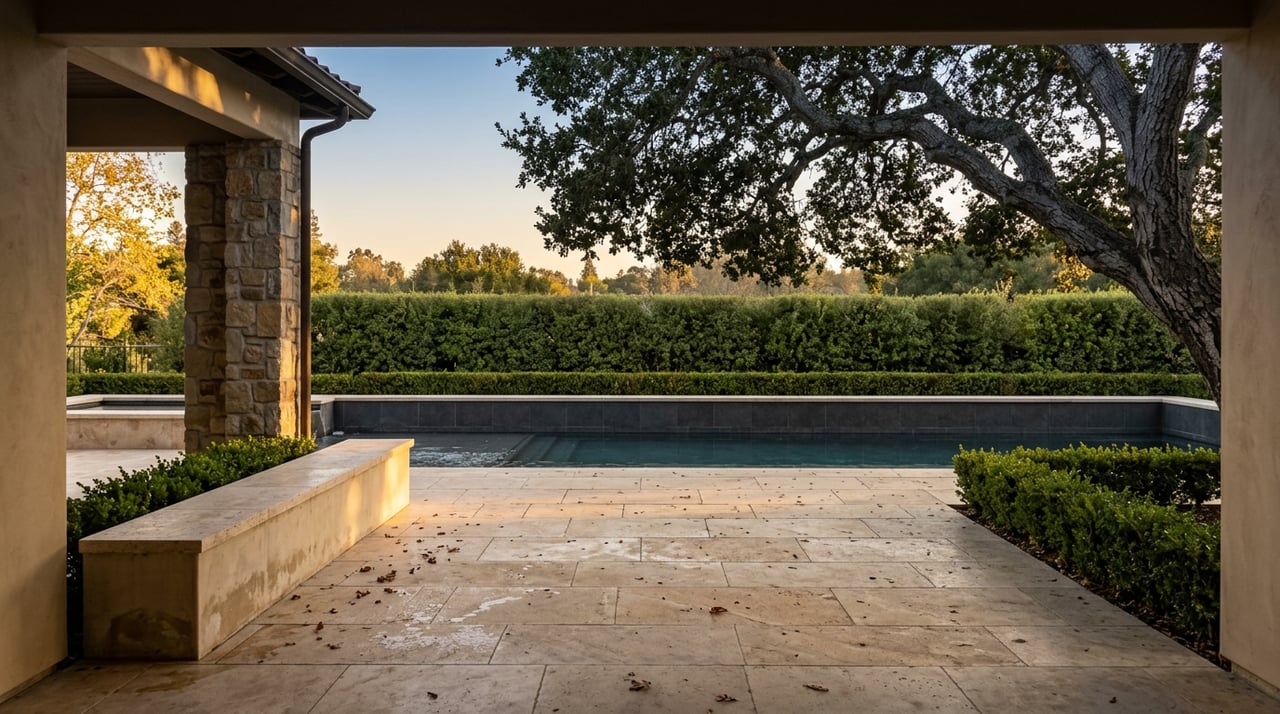
A buyer touring San Carlos this fall will likely see two very different kinds of "updated" in the same afternoon. One house has a new kitchen, a wider primary suite, a modern forced-air system, and double-pane windows throughout, the kind of remodel that reliably lifts resale value across most of the Peninsula. The other has original single-pane glass walls, a radiant-heat concrete slab, and a floor plan that hasn't changed since the 1950s. Ask which one to bid on, and the instinct usually favors the first.
In San Carlos, that instinct is wrong more often than buyers expect. The second house might be one of roughly 160 Eichler homes tucked into four small tracts across the city, and for that specific slice of inventory, the renovation that raises value everywhere else in town is the one that erases it.
That inversion is the real story behind San Carlos's housing numbers this year. The city reports a single median price, but that median is stitched together from two markets that don't compete with each other, don't attract the same buyers, and reward opposite decisions about what to change before a sale.
What the citywide number is actually measuring
Over the three months ending July 2026, San Carlos homes sold for a median of $2.5 million, essentially flat compared to the same period a year earlier. Price per square foot told a louder story: the median hit roughly $1,440, up 37 percent year over year. Homes were still moving fast, a median of 12 days on market, matching last year's pace, with 94 homes sold in July compared to 79 a year earlier.
Zoom out to the first half of 2026 and the pattern holds. New single-family listings hit their highest level in five years, and average and median prices climbed back to within reach of the records set in 2021 and 2022. Two homes closed above $6 million in that six-month window alone. None of that reads like a market cooling off. It reads like a market recovering its old ceiling with more inventory moving through it than it's had in half a decade.
Here's the detail that changes how you should read all of it. Through the first half of the year, 140 homes changed hands in San Carlos and only 24 of those sales, 17 percent, were all-cash. That's barely above 2025's full-year rate of 15.6 percent. A market this competitive, with sale prices sitting close to record highs, isn't being driven by cash-rich buyers waiving financing to win bidding wars. Most people buying in San Carlos right now are doing it with a mortgage, at whatever rate the week offers. The competition is real, but it isn't the all-cash sprint that sale-to-list ratios alone might suggest.
The second market hiding inside the first
Now for the part the citywide median can't see. Joseph Eichler began building in San Carlos in the early 1950s, and unlike his sprawling tracts in Palo Alto or Sunnyvale, his San Carlos footprint stayed small. The city's four Eichler subdivisions are:
- Atherwood
- Sequoia Meadow
- Fairwood
- a smaller tract on Goodwin Avenue
Together they total around 160 homes. Of the estimated 11,000 Eichler homes built statewide, San Carlos's cluster amounts to a rounding error, and that scarcity is exactly why the segment behaves nothing like the rest of the city's inventory.
A market this small barely shows up in monthly statistics. When only a handful of Eichlers trade in any given quarter, one atypical sale, a fully restored showpiece or a long-deferred fixer, can swing a median or a price-per-square-foot figure more than any real shift in demand would. That's worth remembering the next time a headline number out of a small city like San Carlos looks like it moved dramatically in a single quarter. With total closings still in the double or low-triple digits some months, composition, not appreciation, can be doing most of the work.
The buyers chasing these homes aren't shopping the same way as buyers in the broader San Carlos market. Eichler buyers on the Peninsula tend to be design-conscious professionals, often in tech, drawn specifically to the post-and-beam construction, glass walls, and open, low-slung floor plans that define the style. They aren't comparing square footage or counting bathrooms the way a move-up buyer shopping a conventional remodel would. They're paying a premium for something specific, finite, and unrepeatable.
Why the same fix adds value in one market and subtracts it in the other
This is where the two markets actually diverge in practice. In most of San Carlos, a full remodel, new systems, an expanded kitchen, updated windows and insulation, brings a home in line with what today's move-up buyer expects and typically supports a higher sale price. Inside the four Eichler tracts, that same checklist can work against a seller. Swapping single-pane glass walls for standard vinyl windows, converting a radiant slab to forced-air ducting, or reconfiguring the open plan into more conventional rooms doesn't modernize the home so much as it makes it look like every other house in San Carlos, exactly what the Eichler buyer pool is trying to avoid. The renovation that would add six figures to a conventional listing can quietly remove the reason a design-focused buyer was willing to pay a premium in the first place.
That doesn't mean these homes can't be updated. Owners who work with the style regularly find ways to modernize systems while preserving the sightlines and materials that define it. The point isn't that improvement is impossible. It's that improvement means something different depending on which of San Carlos's two markets a given house belongs to, and treating both markets the same way is the mistake.
What this means if you're comparing San Carlos to other Peninsula cities
This matters beyond the roughly 160 households who happen to own one of these homes. Anyone using San Carlos's median price to compare it against Belmont, San Mateo, or Redwood City is really looking at a blend of two products that don't behave alike: a recovering conventional single-family market moving fast and close to record highs, and a small, scarcity-driven niche market that operates on its own supply and demand, separate from mortgage rates or listing volume. A buyer or seller who understands only the first half of that story will misjudge both the pace of the broader market and the pricing logic of the smaller one.
| Broader San Carlos single-family market | The four Eichler tracts | |
|---|---|---|
| What buyers compare | Size, systems, finish level | Design authenticity, scarcity |
| What raises value | Full remodel, expanded footprint | Preserved original materials, sympathetic updates |
| What lowers value | Deferred maintenance, dated systems | Conventional remodels that erase character |
| Typical pace | 12 days on market as of July 2026 | Rare enough that pace is hard to generalize |
| Buyer financing | Mostly mortgaged, 17% all-cash in H1 2026 | Design-focused buyers, often tech professionals |
A few questions worth asking before you tour
How many Eichler homes are actually in San Carlos? Around 160, spread across four small tracts: Atherwood, Sequoia Meadow, Fairwood, and a tract on Goodwin Avenue. That's a small fraction of the roughly 11,000 Eichler homes built across California.
Is San Carlos really a cash buyer's market right now? Not based on the first half of 2026. Only 17 percent of the 140 homes that sold were all-cash purchases, barely above 2025's 15.6 percent rate. Most buyers are financing.
Does remodeling always raise resale value in San Carlos? Usually, for the conventional single-family stock that makes up most of the city. Inside the Eichler tracts, a conventional remodel can undercut the very features that draw buyers to the style in the first place.
Where this leaves you
The median price on any portal is a single number describing two markets that don't share a playbook. If you're comparing San Carlos to another mid-Peninsula city, or trying to figure out what a specific renovation is actually worth before you list, that distinction is the difference between a decision that makes sense and one that quietly costs you.
Lana Morin Pierce works these micro-markets tract by tract across San Mateo County. If you're weighing a purchase or a sale in San Carlos and want a clear read on which market your home, or your target, actually belongs to, Book a Consultation to talk through the specifics.